Trusted Data. Clarity in Orbit.

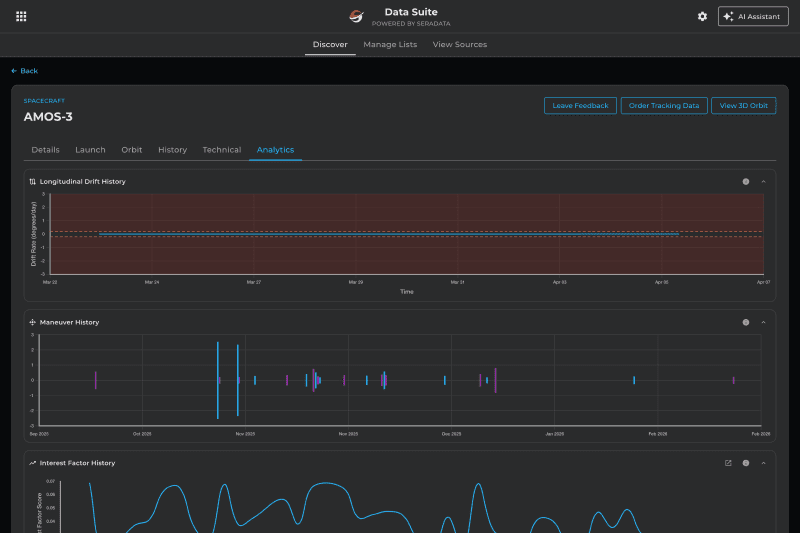
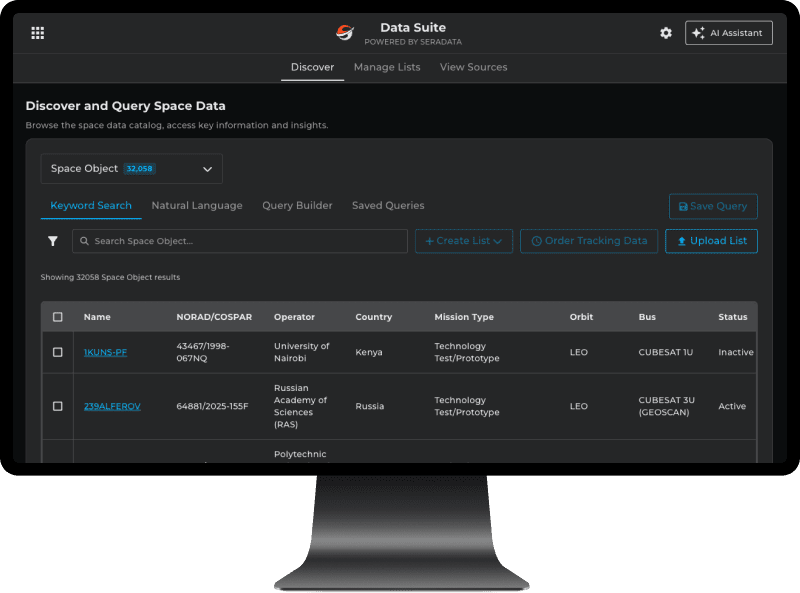
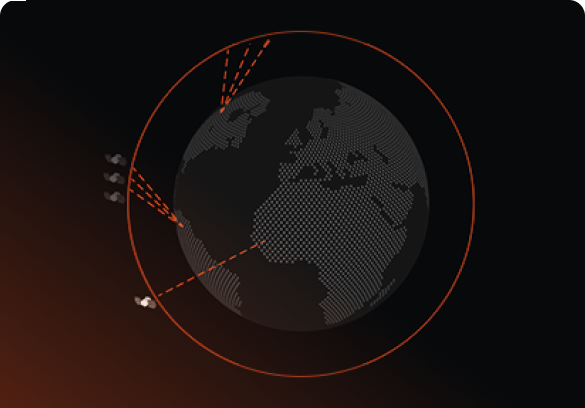
The Slingshot Data Catalog unifies orbital data from the Slingshot Global Sensor Network (SGSN) and Sovereign Space Object Tracking (SSOT) into a single, trusted data layer. It enables users to access, request, and compare orbital observations — providing the foundational data that supports analytical and AI-driven capabilities across the Slingshot ecosystem.
Website acticvity

Key Features

Unified Access Layer

Search, filter, and retrieve SGSN optical tracking data across LEO to xGEO, including astrometric and photometric observations, derived orbital products (state, covariance, ephemerides), and catalog-support metrics.

Taskable Observation Network

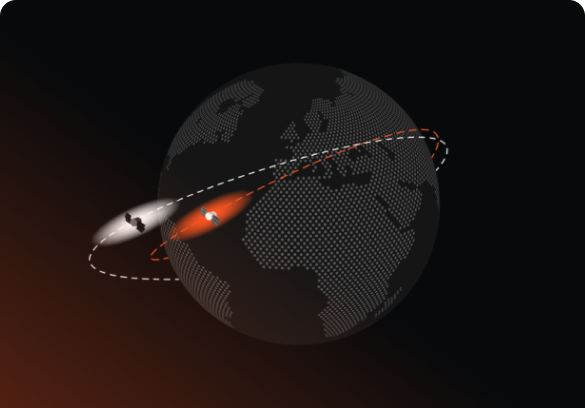
Task the Slingshot Global Sensor Network (SGSN) for dedicated optical observations supporting anomaly follow-up, maneuver monitoring, and high-priority tracking across orbital regimes, using a global day/night sensor network.

Sovereign Space Object Tracking

Support sovereign space object tracking using SGSN-collected optical data with secure access control, retention, and audit trails, enabling national or agency-specific custody of catalog data and derived products.

Multi-Orbit Sensor Coverage

Persistent LEO-to-xGEO optical coverage using the SGSN’s 20+ global sensor locations and 150+ day/night optical sensors, supporting continuous custody of spacecraft and debris across orbital regimes.

Processing & Validation Pipeline

SGSN observations are validated, fused, and processed through Slingshot’s processing suite, including MFAST-enabled orbit determination, maneuver detection, propagation, and catalog update workflows.

Metrics & Reporting

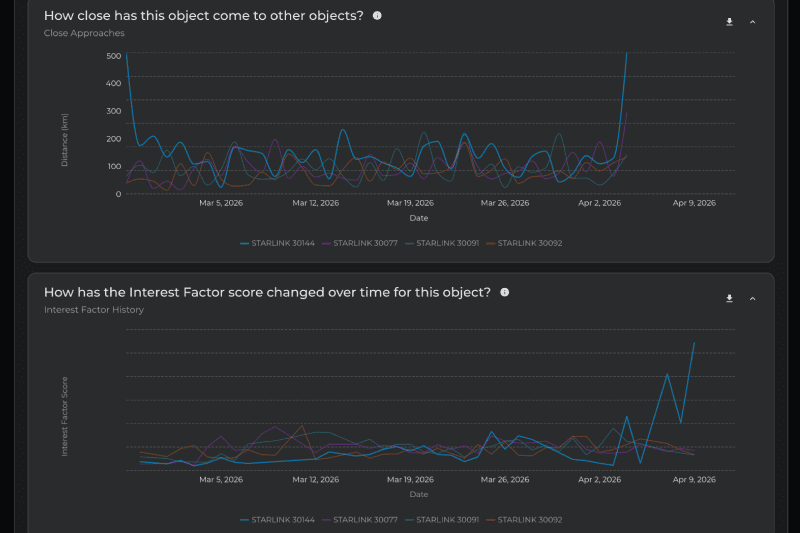
Monitor SGSN network performance, including observation frequency, detection rates, and catalog-support effectiveness, informed by 500M+ collected observations and ongoing optical tracking activity.
Example Use Cases

Icon

Government & Defense

Detect and track new objects through uncued object detection, dedicated revisit rates, and rapid event follow-up to establish custody and support accelerated threat assessment.
Icon

Fleet Operators

Retrieve near real-time orbital data to support automated collision-avoidance analysis, feed maneuver-planning systems, and monitor fleet health.
Icon

Analysts

Combine catalog data with Seradata metadata and insights to support event analysis as well as mission and risk intelligence.
Icon

Developers

Access structured APIs through the Developer experience for streamlined integration into visualization tools, ML models, and analytics dashboards.

Featured Capabilities

View our Products
Icon

Agatha AI

AI-driven insights engine for detecting, analyzing, and explaining anomalies in space object behavior. Leverages advanced analytics and machine learning to identify outliers, trends, and emerging risks early enough to support informed operational decisions.
Icon

TALOS AI

An AI-powered maneuver planning and decision-support system that generates evaluated, risk-aware maneuver options for spacecraft operators.
Icon

Digital Space Twin

An interactive 3D environment for modeling and visualizing near real-time orbital data. Explore missions, maneuvers, and conjunctions in a dynamic spatial context built for operators, analysts, and educators alike.


Icon

Tracking Data

On-demand orbital tracking service for specific objects and event-driven observations. Task sensors, submit custom data requests, and receive curated results powered by Slingshot’s tasking and tracking infrastructure.
Icon

Developer Docs

Centralized documentation hub for APIs and future MCP server integrations supporting Slingshot’s ecosystem. Built for engineers, integrators, and researchers building with Slingshot data.
Icon

Processing, Fusion and Analysis Tools

Processing and fusion systems that transform raw sensor observations into high-fidelity orbital products and actionable insights.


Trusted Performance.
Operational Scale.

Operators use the Slingshot Global Sensor Network (SGSN) to maintain custody and characterize objects across LEO to xGEO using a globally distributed, day-and-night sensor fleet integrated directly into mission workflows.

Learn about our Sensor Network