INTERNATIONAL & RESEARCH PARTNERS

Advancing Global Understanding of the Space Domain

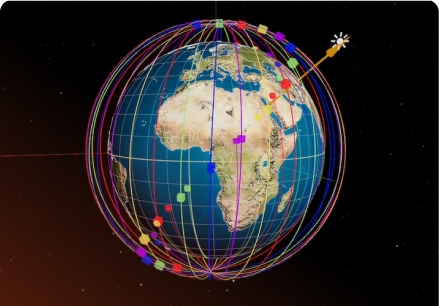
Slingshot enables international agencies, researchers, and partners to explore, analyze, and understand the space domain—combining sensor-originated data, advanced analytics, and collaborative environments to support research, policy, and global coordination. Slingshot gives researchers, international agencies, and mission partners a shared environment to explore orbital behavior, test scenarios, and evaluate outcomes before action is required. With transparent models and physics-based simulation, teams can align faster, communicate more clearly, and make better-informed decisions together.
OPERATIONAL USE CASE

From Data to Insight

Access to space data alone is no longer enough. International agencies, researchers, and mission partners need the ability to analyze complex orbital dynamics, simulate scenarios, and build models in a shared, transparent environment.

Slingshot helps partners turn data into insight—supporting discovery, enabling collaboration, and improving decision-making across the global space community.

SENSE

Access and Explore Orbital Data

WHAT DATA IS AVAILABLE AND WHAT IS HAPPENING?

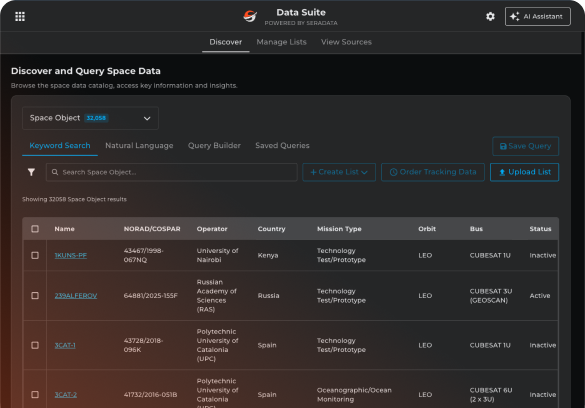
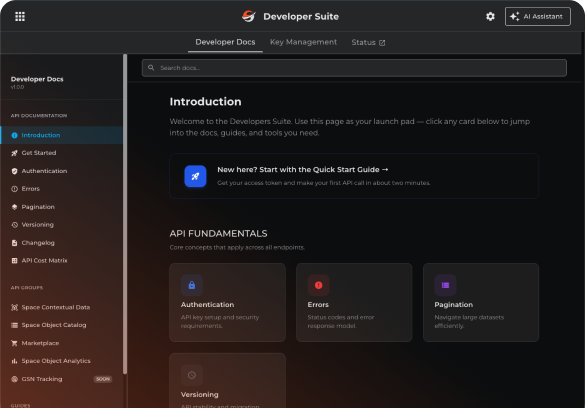
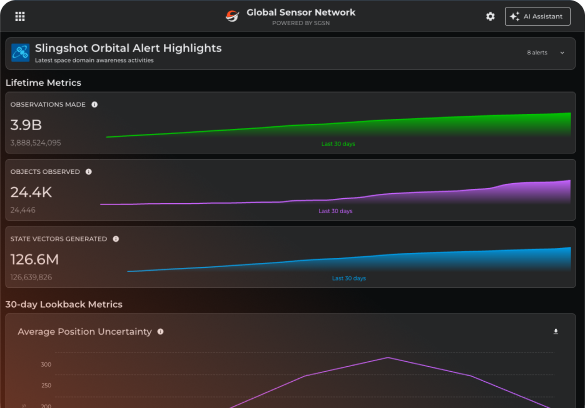
Slingshot provides access to curated, observation-driven datasets and global tracking inputs—enabling partners to explore real-world space activity across orbital regimes.

  • Data Catalog — research-grade orbital datasets

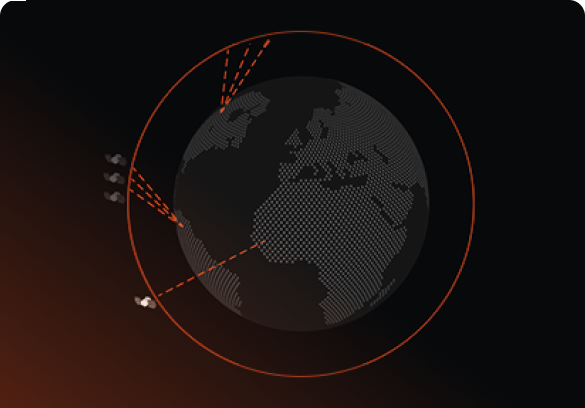
  • Slingshot Global Sensor Network (SGSN)

  • Third-party and open-source data integrations

OUTCOME:

Accessible, high-quality data to support academic research, modeling, and analysis.

FUSE

Analyze and Generate Insight

WHAT DOES THE DATA REVEAL?

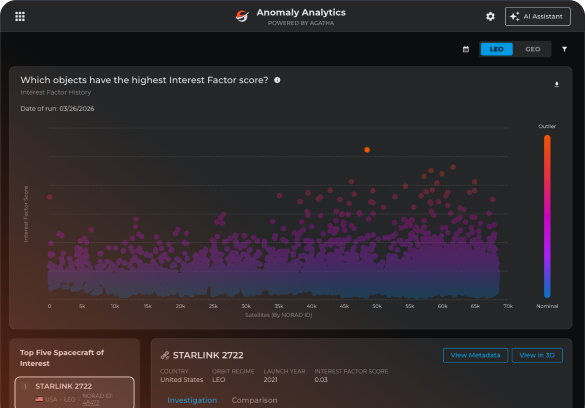
Data is processed through advanced analytics, astrodynamics, and AI to uncover patterns, anomalies, and trends across the space domain.

  • AI-driven anomaly detection and analysis (Agatha)

  • Orbital analysis and modeling tools

  • Historical and real-time data correlation

OUTCOME:

Deeper understanding of space activity, behavior, and emerging risks.

DECIDE

Coordinate and Operate in a Live Environment

HOW DO WE INTERPRET AND SHARE INSIGHTS?

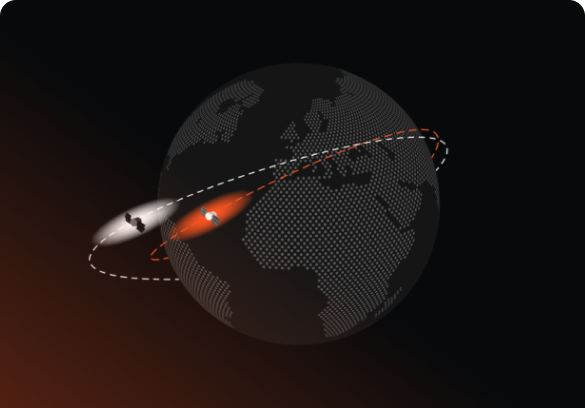
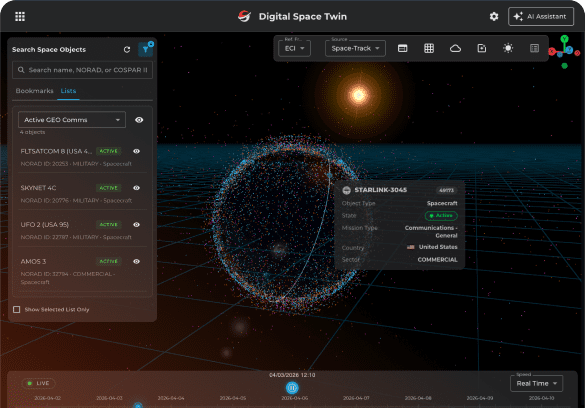
Partners use interactive, physics-based environments to visualize scenarios, test hypotheses, and collaborate across institutions and borders.

  • Digital Space Twin (DST) — interactive visualization

  • Laboratory — simulation and learning environment

  • Beacon — shared awareness and coordination

OUTCOME:

Shared understanding and cross-border collaboration on space safety, policy, and research initiatives.

ACT

Inform Policy, Research, and Innovation

HOW DO WE APPLY THESE INSIGHTS?

Insights are applied to inform policy development, academic research, and global coordination efforts—enabling more transparent and data-driven decision-making.

  • Policy and regulatory analysis

  • Risk modeling and space traffic coordination studies

  • Algorithm development and validation

OUTCOME:

More informed policy, stronger research outcomes, and improved global coordination across the space domain.