One Platform. Every Dimension of Space Intelligence.
Slingshot is building a unified ecosystem of space intelligence applications. From real-time data and analytics to emerging AI-driven insights and developer tools, we are creating a single entry point for everything Slingshot - enabling users to manage, analyze, and act with clarity across the orbital environment.
Slingshot Portal brings together space data, AI-driven analytics, and mission workflows in one platform, so teams can move from detection to action without switching systems.
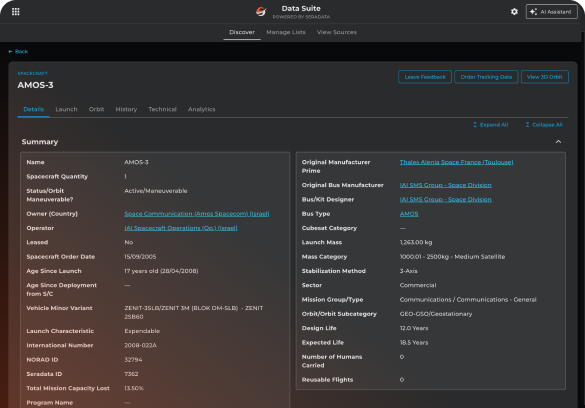
Comprehensive satellite and launch intelligence built on decades of curated historical data. Seradata provides mission context, market insight, operator metadata, and interconnected event histories that enable analysts to assess mission assurance, monitor launch activity, and understand competitive landscapes with confidence.
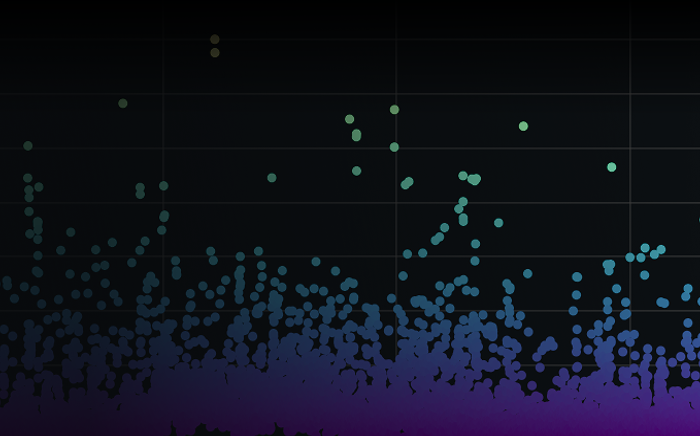
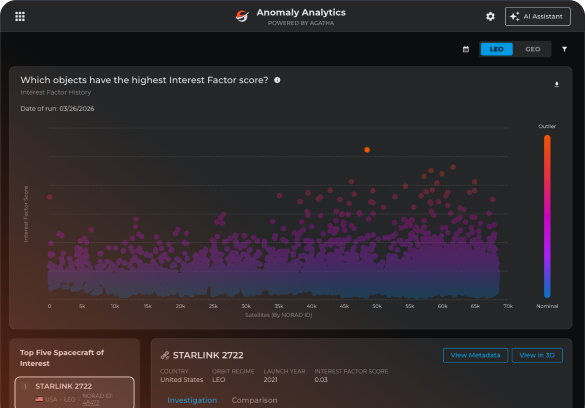
An AI-driven insights engine for identifying, analyzing, and explaining anomalies in space object behavior. Agatha AI fuses historical trends with explainable machine learning to highlight outliers, detect unexpected events, and surface emerging operational risks early enough to inform response and coordination.
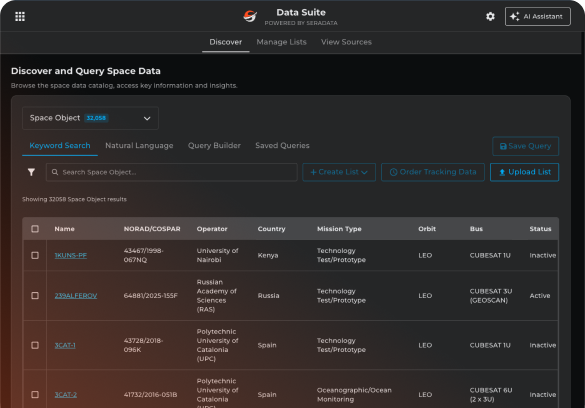
A unified data layer connecting the Slingshot Global Sensor Network (SGSN) and Sovereign Space Object Tracking (SSOT) systems. The Data Catalog delivers continuously updated, high-precision orbital intelligence - from raw observations refined by MFAST to ODaaS fused state vectors - supporting situational awareness, analysis workflows, and mission-ready decision-making.
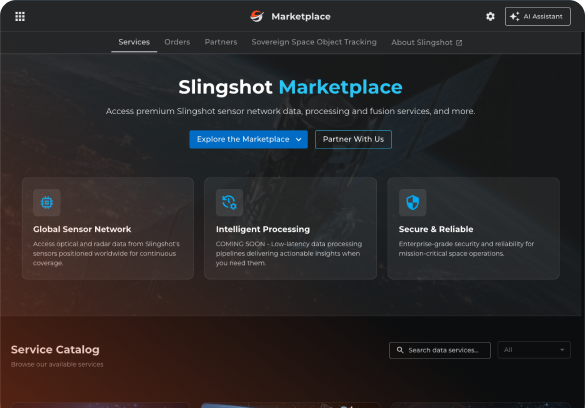
On-demand orbital tracking for specific objects and event-driven observations. Users can submit tasking requests, specify custom data collections, and receive curated astrometric, photometric, or derived products generated by Slingshot’s global sensor and scheduling infrastructure. Ideal for characterization, custody, and high-precision follow-up.
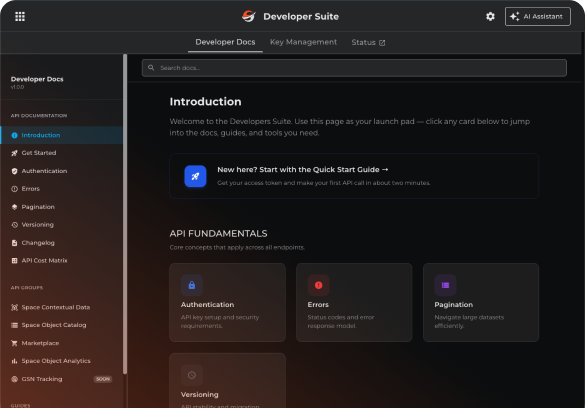
A centralized documentation and integration hub for Slingshot APIs, future MCP services, and ecosystem endpoints. Developers, integrators, and researchers can rapidly build workflows, automate data pipelines, and embed Slingshot intelligence directly into mission tools and dashboards.
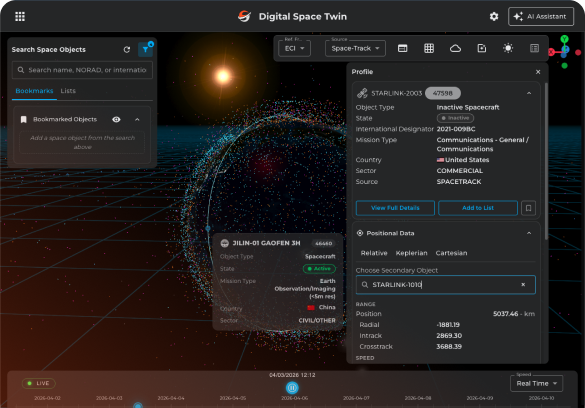
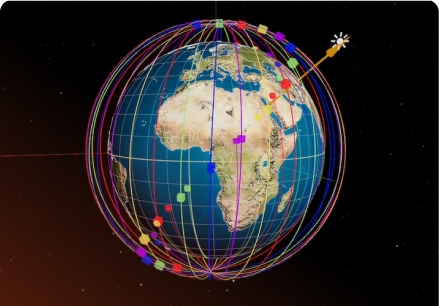
A physics-based 3D environment for modeling and visualizing near real-time orbital activity. The Digital Space Twin enables users to explore trajectories, mission scenarios, conjunctions, and orbital changes within dynamic spatial and temporal contexts - enriching training, analysis, and mission planning workflows.
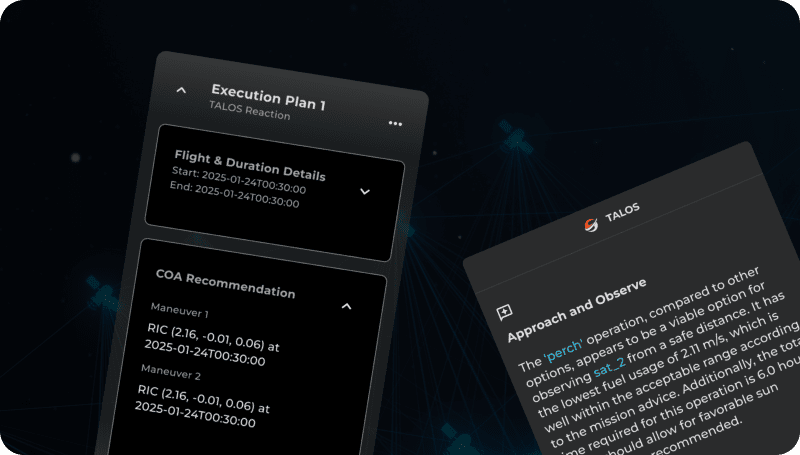
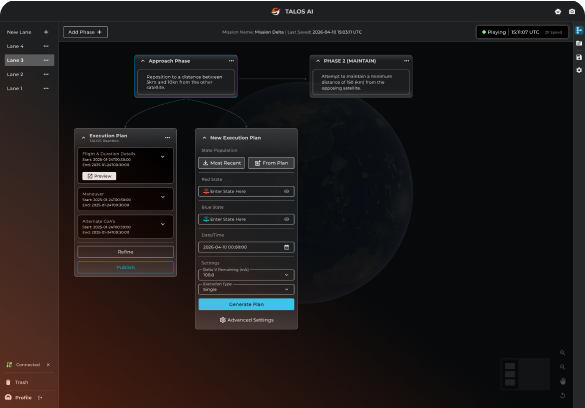
A decision-support system that uses analytics, maneuver modeling, and orbital simulation to help evaluate risk-informed courses of action. TALOS AI is designed to support operators in comparing maneuver options, assessing tradeoffs in risk, delta-v, and mission objectives, and building confidence before executing mission commands.
A unified space domain awareness platform for conjunction alerts, operator-to-operator coordination, and global incident visualization. Beacon consolidates CDMs, user trajectories, and maneuverability context to help teams prioritize risk, coordinate with external stakeholders, and streamline operational decision-making during conjunction events.
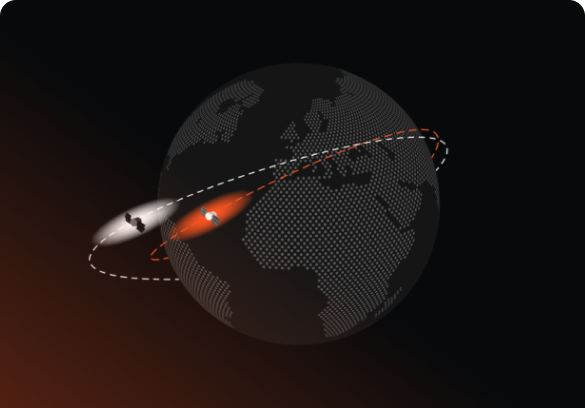
A collaborative, physics-based simulation environment for teaching and exploring orbital mechanics and space domain concepts. Slingshot Laboratory provides a realistic orbital sandbox where users can investigate trajectories, experiment with orbital changes, and visualize complex dynamics - making space behaviors intuitive, interactive, and mission-relevant.
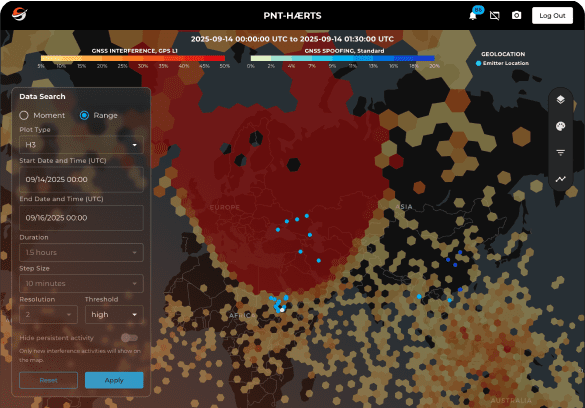
An advanced geospatial intelligence platform for detecting, characterizing, and mapping global GNSS interference events. PNT-SA analyzes signal distortions across multiple constellations to reveal jamming activity, spoofing patterns, and regional threat dynamics - delivering high-fidelity situational awareness to operators and analysts.
A suite of processing and fusion engines that transform raw sensor observations into high-quality orbital intelligence. These modular services support precise orbit determination, propagation, conjunction assessment, and maneuver analysis - enabling reliable, repeatable results for mission operations and analytic workflows.
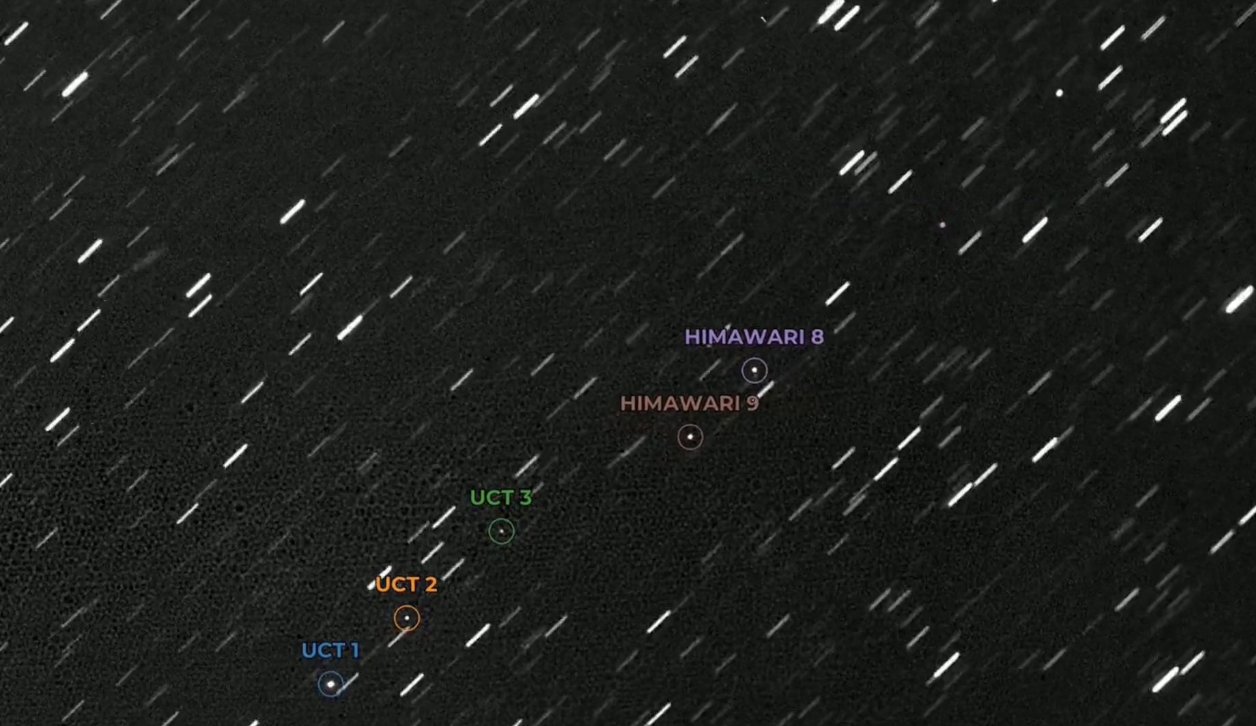
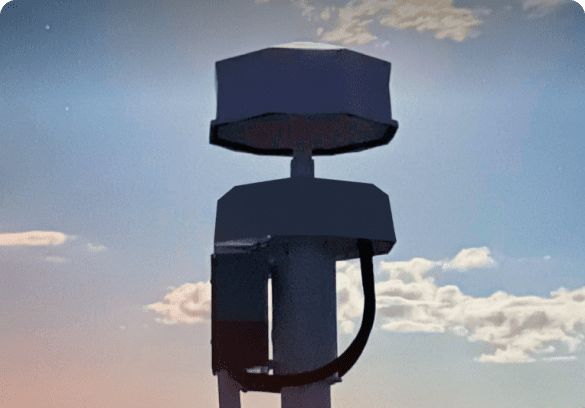
Taskable, gimbaled telescope system designed for cued tracking of LEO to GEO objects. Combines rapid tasking and dedicated revisit scheduling to deliver high-fidelity tracking, maneuver verification, anomaly follow-up, and targeted observations.
Hardware details upon request
POWERED BY PNT-SA
Horus
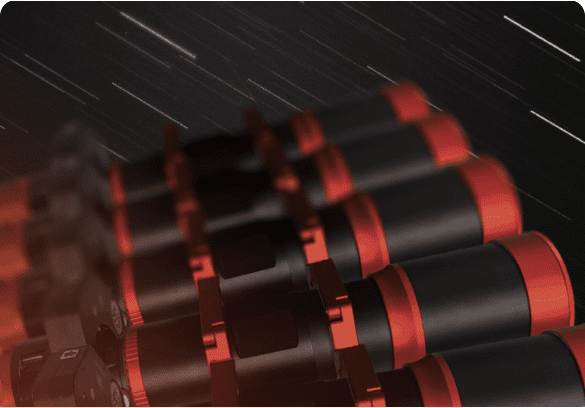
Staring, wide-field optical fence system designed for uncued LEO tracking. Operates at night, delivering continuous coverage and rapid detection of uncorrelated tracks to maintain orbital custody and support event discovery.
Hardware details upon request
POWERED BY PNT-SA
Argus
Staring, long-range optical telescope designed for uncued GEO tracking. Provides nighttime persistent surveillance and high-precision tracking of objects in geostationary orbit.
Hardware details upon request
Data
Access the world’s most comprehensive space intelligence datasets and tools for exploration, visualization, and integration.
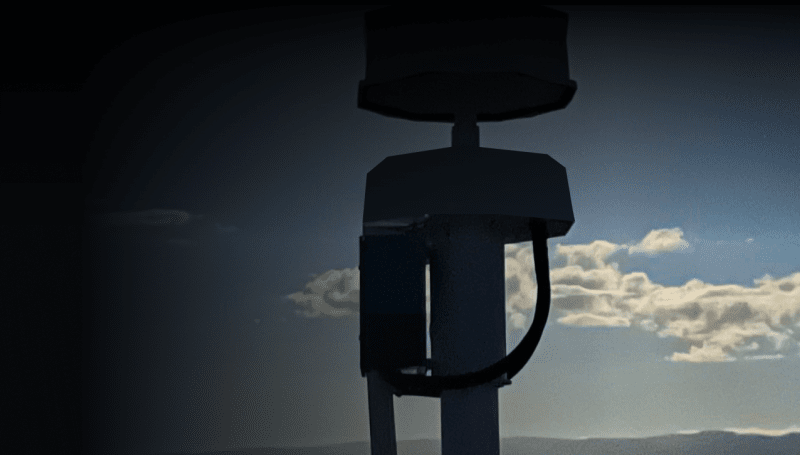
Slingshot’s modular sensor family — Varda, Horus, and Argus — enables scalable coverage from LEO to cislunar space. Systems can be deployed worldwide to build networks tailored to customer needs.